· Alex Derville · 8 min read
Defining Dietary Patterns: A Complete Guide to Omnivore, Flexitarian, Vegetarian, Pescatarian, Vegan and More
Omnivore, flexitarian, pescatarian, vegan… Feeling lost in the diet jargon? This guide breaks down each eating pattern so you can tell them apart.

Making Sense of the Diet Alphabet Soup
Omnivore, flexitarian, pescatarian, lacto-ovo vegetarian… Sound familiar? If you’ve ever scrolled through a restaurant menu or a nutrition article and felt lost in the jargon, you’re not alone. The world of dietary labels can feel overwhelming, and honestly, a bit gatekeepy. What’s the real difference between a vegetarian and a vegan? Where does pescatarian fit in? And is “flexitarian” even a real thing?
This guide explains the difference between each diet: what you eat, what you skip, and the environmental impact. By the end, you should know which is which.
The Omnivore Diet
Official Definition: An omnivore is an organism that consumes both plant and animal-based foods without restriction. In the context of human nutrition, an omnivorous diet includes meat, poultry, fish, dairy, eggs, and all plant-based foods.1
What You Eat: An omnivorous diet, particularly the standard American diet, typically includes beef, pork, chicken, fish, dairy products, eggs, grains, vegetables, and fruits with minimal restriction. It’s the most common eating pattern globally and in the United States.
Environmental Impact: The standard American omnivorous diet produces about 5.8 kg of CO₂ per person per day, the highest among major diets. Animal-based foods account for 80% of diet-related emissions, with beef alone at 40%. Food production is roughly 26% of U.S. greenhouse gas emissions.23
The Flexitarian Diet
Official Definition: A flexitarian diet, also called semi-vegetarian, is centered on plant-based foods with limited and flexible inclusion of meat. The term was added to Merriam-Webster’s Collegiate Dictionary in 2012 and was voted the American Dialect Society’s most useful word in 2003.4
What You Eat: Flexitarians prioritize whole plant-based foods (fruits, vegetables, legumes, whole grains, nuts, and seeds) while occasionally including meat, fish, and dairy. A typical flexitarian plate allocation looks like this: 40% vegetables and fruits, 20% whole grains, 15% legumes, 10% eggs and dairy, and only 10% or less fish and meat. Examples of flexitarian meals include lentil-based stews with occasional chicken, vegetable stir-fries with tofu, and plant-forward tacos with optional ground turkey on the side.
Flexitarians typically adopt one of three levels: beginners have two meatless days per week; advanced flexitarians limit meat to three to four days per week; and expert flexitarians avoid meat five out of seven days.5
Environmental Impact: Cutting meat one day per week saves about 0.46 metric tons of CO₂ per year per household (roughly an 800 km car trip). No big lifestyle overhaul needed.6
The Vegetarian Diet
Official Definition: A vegetarian diet excludes all meat, fish, and poultry while typically including dairy products, eggs, and other plant-based foods. The American Heart Association supports vegetarian patterns as part of cardiovascular disease prevention guidelines.7
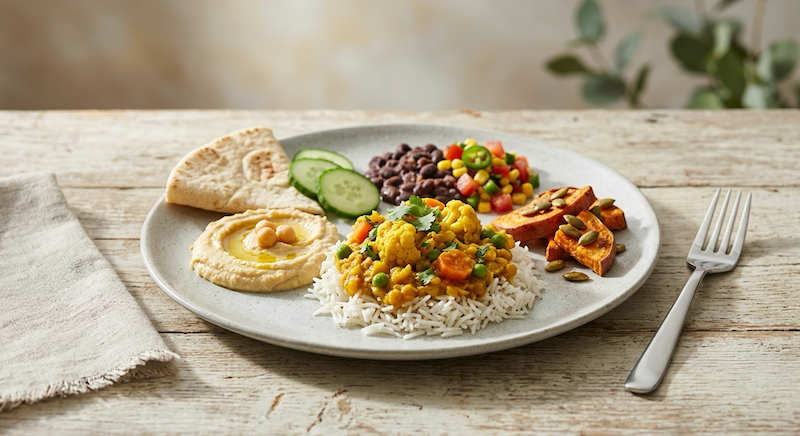
What You Eat: Vegetarians consume vegetables, fruits, whole grains, legumes, nuts, seeds, dairy products, and eggs, but exclude all flesh foods. Common vegetarian meals include vegetable stir-fries with tofu, lentil curries, chickpea salads, vegetable omelets, and cheese-based pasta dishes. Dairy and eggs provide key nutrients including protein, B12, calcium, and iron.
Vegetarians may further specify their approach: lacto-vegetarians exclude eggs but consume dairy; ovo-vegetarians exclude dairy but consume eggs; and lacto-ovo vegetarians include both eggs and dairy.8 Vegetarianism is most common in India, where 39% of adults identify as vegetarian, against about 5% in the United States (vegetarians by country).
Environmental Impact: Vegetarian diets produce about 2.6 kg CO₂ per person per day (ovo-lacto), a 35% cut vs. omnivore. Vegetarians have 15–41% lower cardiovascular disease risk and about one-third lower environmental footprint.97
The Vegan Diet
Official Definition: A vegan diet excludes all animal products: meat, poultry, fish, dairy, eggs, honey, gelatin, and any food derived from animals.10
What You Eat: Vegans consume only plant-based foods: vegetables, fruits, legumes, whole grains, nuts, seeds, plant-based milks (oat, soy, almond), plant-based cheeses, tofu, tempeh, seitan, and nutritional yeast. Examples: bean chili with cornbread, quinoa buddha bowls, lentil pasta with marinara, chickpea curry with rice.
Vegans need to watch B12, vitamin D, iodine, and calcium, usually via fortified foods or supplements.9
Environmental Impact: Vegan diets have the lowest footprint at 2.1 kg CO₂ per person per day, 46% less than a Mediterranean omnivorous diet. Legumes emit 2.0 kg CO₂ per 100g of protein vs. beef at 49.9 kg.119
The Pescatarian Diet
Official Definition: A pescatarian diet excludes meat and poultry but includes fish and shellfish as the primary animal protein source. The term derives from the Italian word “pesce,” meaning fish, combined with “vegetarian.”12
What You Eat: Pescatarians consume fish, shellfish (salmon, tuna, cod, shrimp, mussels, oysters), dairy, eggs, and all plant-based foods, but exclude beef, pork, chicken, turkey, and other land-based meats. A typical pescatarian diet includes grilled salmon with roasted vegetables, shrimp tacos with beans, tuna salad with whole grain bread, and meatless pasta supplemented occasionally with fish or shellfish.
The 2020-2025 Dietary Guidelines for Americans recommend pescatarians consume at least 225 g of seafood per week, with pregnant women limited to no more than 340 g of low-mercury seafood weekly.13
Environmental Impact: Pescatarian diets produce about 3.2 kg CO₂ per person per day, a 16% cut vs. omnivore. The footprint varies by species and fishing method: wild-caught sardines, anchovies, herring, and salmon are about six times lower than beef and need little freshwater or land. Farmed shrimp and lobster can have higher emissions.914
See also Flexitarian vs pescatarian for a side-by-side look at rules, health, and which pattern is easier to sustain..
The Pollotarian Diet
Official Definition: A pollotarian diet, derived from the Spanish word “pollo” (chicken), is a form of semi-vegetarianism that includes poultry as the only meat source. This approach excludes red meat, pork, fish, and shellfish.15
What You Eat: Pollotarians consume chicken, turkey, and duck alongside plant-based foods (vegetables, fruits, whole grains, legumes, nuts, seeds) and may include dairy and eggs. Typical pollotarian meals include grilled chicken with quinoa and roasted vegetables, turkey meatballs with lentil pasta, or duck with sweet potato and green beans.
Pollotarians typically eat poultry two to three times per week, with skinless, grilled, or baked preparations preferred over fried options to minimize saturated fat intake.16
Environmental Impact: Chicken produces 5.7 kg CO₂ per 100g of protein, about nine times less than beef. Swapping red meat for poultry cuts emissions without going full vegetarian.11
The Climatarian Diet
Official Definition: A climatarian diet prioritizes low-carbon foods. Instead of cutting out entire food groups, climatarians choose based on carbon footprint.17
What You Eat: Climatarians focus on local, seasonal foods and limit high-impact animal products (especially beef and lamb). They aim for about 75% plant-based, plus sustainable seafood, eggs, minimal dairy, and whole grains. Examples: vegetable stews, legume curries, responsibly sourced fish with seasonal vegetables.
They avoid beef, lamb, air-freighted produce, out-of-season greenhouse vegetables, and heavily processed foods.17
Environmental Impact: Climatarian diets produce 4.1 to 5.6 kg CO₂ per day, saving up to 2,040 kg of CO₂ per year vs. the standard American diet (about 8,140 km fewer driven). It sits between omnivore and strict plant-based: lower impact than the former, more flexible than the latter.2
The Paleo Diet
Official Definition: The paleo diet is based on foods that were likely available before agriculture, so it emphasizes whole, minimally processed foods like vegetables, fruit, nuts, seeds, eggs, fish, and meat. It excludes grains, legumes, dairy, and refined sugar.
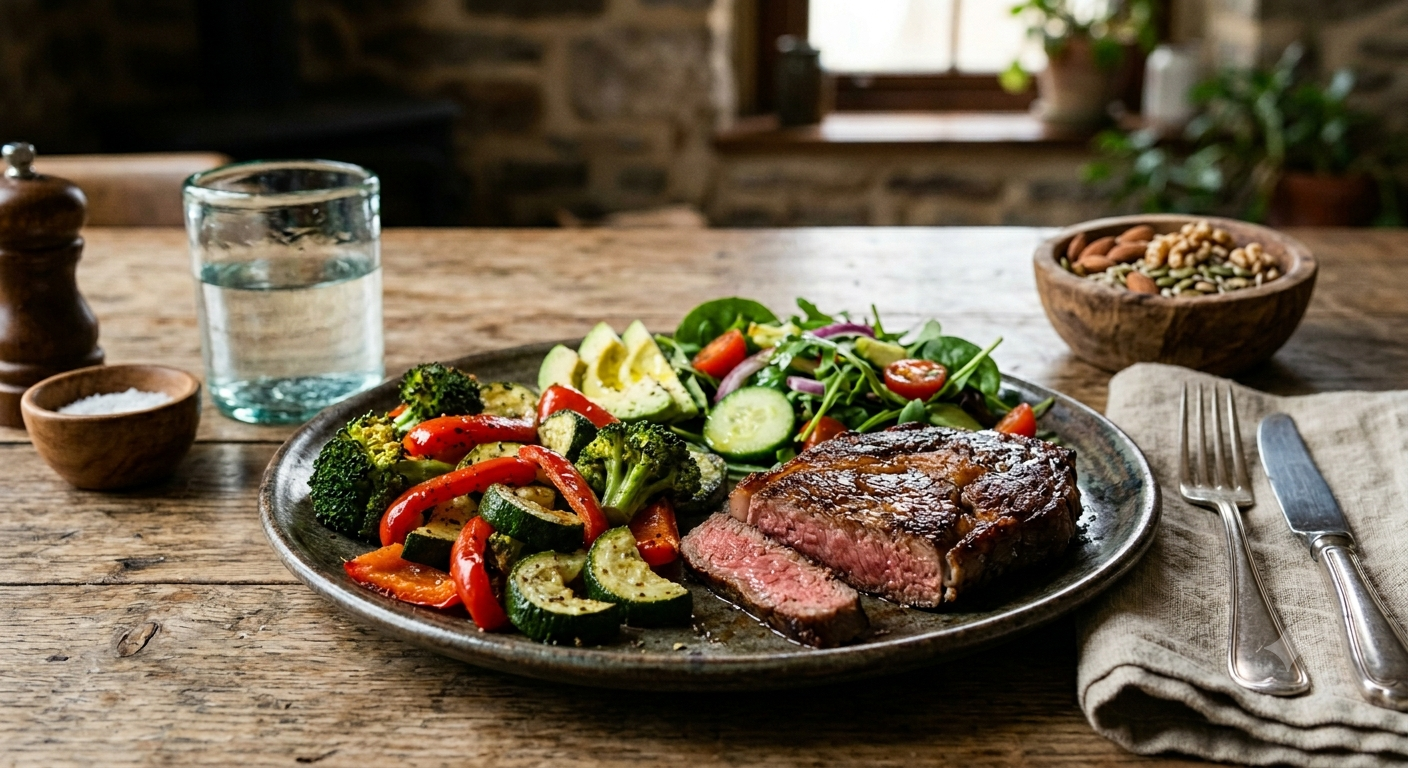
What You Eat: Paleo eaters focus on meat, fish, eggs, vegetables, fruit, nuts, and seeds. They aim for unprocessed, whole foods like grilled chicken with roasted vegetables, salmon salad with avocado, or a veggie omelet with berries. They avoid grains, beans, dairy, and processed foods.
Environmental Impact: Paleo diets produce around 5.4 kg CO₂ per day, which is slightly lower than the standard omnivore diet (about 5.8 kg) but still high due to meat consumption. It sits above flexible plant-based diets but below heavy beef-heavy omnivore patterns.1819
See also Flexitarian vs paleo diet for a side-by-side look at rules, health, and which pattern is easier to sustain.
How the Diets Compare
| Diet Type | Daily CO₂ Emissions (kg) | Reduction vs. Omnivore | Key Characteristic |
|---|---|---|---|
| Omnivore (Standard) | 5.8 | Baseline | Highest emissions; all foods included |
| Paleo | 5.4 | 7% | Meat-heavy; excludes grains & dairy |
| Climatarian | 4.5 | 22% | Flexible; avoids high-impact foods |
| Pescatarian | 3.2 | 45% | Moderate reduction; includes sustainable fish |
| Vegetarian (Ovo-lacto) | 2.6 | 55% | 35% reduction; includes eggs & dairy |
| Vegan | 2.1 | 64% | Lowest emissions; plant-based only |
Less meat, especially red meat, means lower emissions. One person in a household going flexitarian (meat once a week) cuts about 0.46 metric tons of CO₂ per year. That’s a real reduction without going vegan.6
Finding What Works for You
If you’re trying to cut meat, these frameworks help you see where you fit. You don’t have to go vegan to make a difference: cutting red meat one day a week has a similar carbon impact to shopping only at local farmers’ markets.6
The best diet is one you’ll actually stick to. Some do well as vegans; others do better with pollotarian or climatarian. The flexitarian approach fits most people: flexibility over restriction.
Footnotes
https://faunalytics.org/carbon-footprint-and-nutritional-quality-of-popular-diets/ ↩
https://foodloversmarket.co.za/vegetarian-vegan-or-flexitarian-whats-the-difference-2/ ↩
https://www.ioes.ucla.edu/article/paleo-keto-and-climatarian-diets-have-lower-carbon-footprints-than-standard-u-s-diet/ ↩ ↩2 ↩3
https://ellerepublic.de/en/vegan-vegetarian-flexitarian-explained/ ↩ ↩2
https://pmc.ncbi.nlm.nih.gov/articles/PMC6408204/ ↩ ↩2 ↩3 ↩4
https://www.bbcgoodfood.com/health/special-diets/what-flexitarian-diet ↩
https://www.biologicaldiversity.org/programs/population_and_sustainability/climate/Climate-Diet-report.html ↩
https://www.veggly.net/veggie-guide-vegan-vegetarian-diets/ ↩
https://sph.tulane.edu/news/twenty-percent-americans-responsible-nearly-half-us-food-related-greenhouse-gas-emissions ↩
https://www.heartuk.org.uk/dietary-patterns/vegetarian-and-vegan-diets ↩
https://www.openaccessgovernment.org/vegan-diet-reduces-carbon-footprint-by-46-in-new-study/201178/ ↩ ↩2
https://www.sciencedaily.com/releases/2023/02/230228205238.htm ↩
About the Author

Founder of Goodbye Meat