· Alex Derville · 8 min read
How Many Animals Do You Save by Eating Vegetarian?
Rough US numbers in pounds. How many chickens, turkeys, pigs, cattle, lambs, fish, and shellfish one vegetarian year may spare versus the average meat-eater, and where the figures come from.
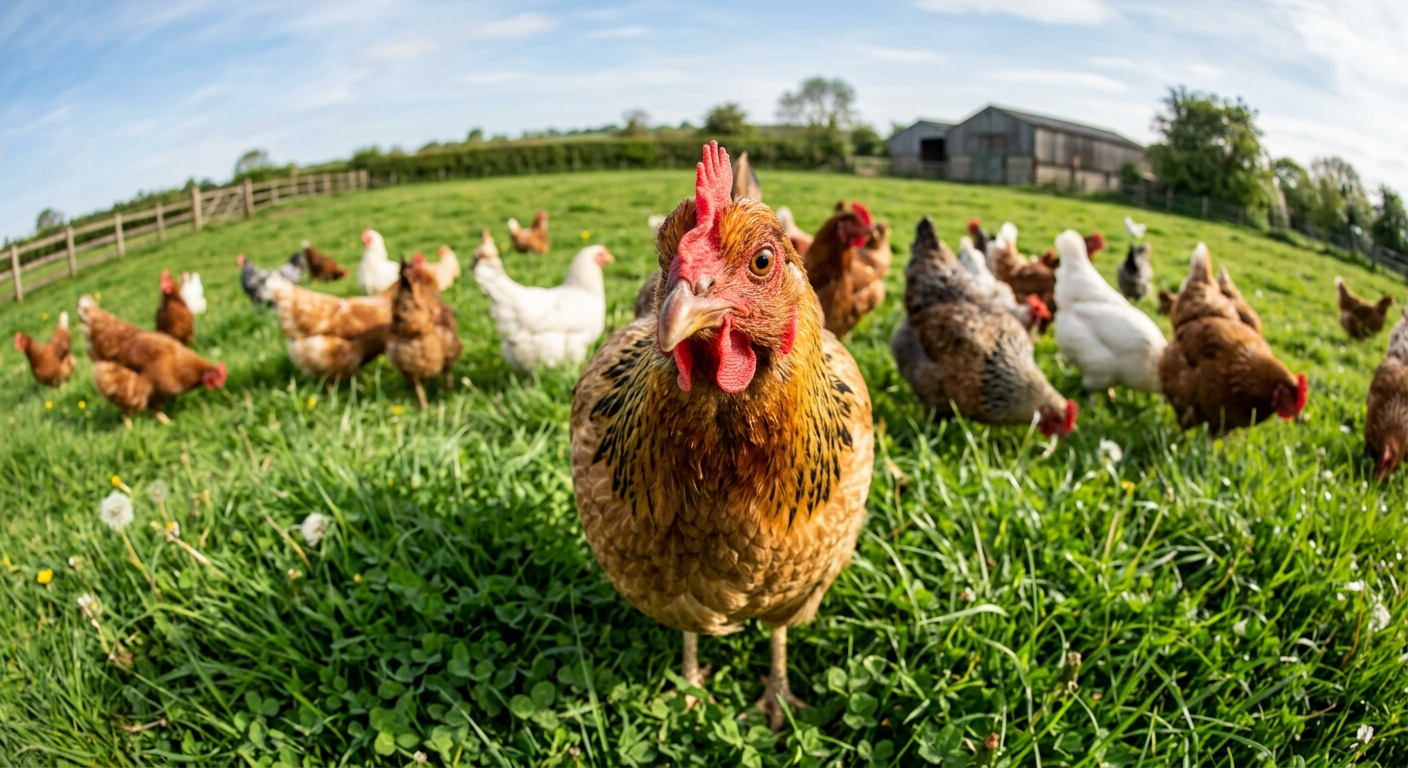
If you eat vegetarian (no meat, poultry, or fish) get asked a lot whether it “really makes a difference.” Numbers are one way to answer. You can compare yourself to the average meat-eater: how much meat and seafood that pattern uses in a year, and how many animals that usually means. On this article, I made the calculation based on the average consumption of a US person, and therefore I used the pounds for units which Americans see on labels. Do not treat the result as a personal score. It is a rough national-average estimate. Habits differ, but one thing stays constant: by head count, chickens and shellfish are almost the whole story.
What “spared” means here
Here, “spared” means meat and seafood you skip is food nobody had to raise or catch for you, compared with a reference diet. The reference is per-capita US consumption: what a typical omnivore’s mix adds up to. If you would have eaten that average, then each vegetarian year avoids about as many slaughtered or killed animals as that share of demand implies. Supply chains are messy; this is a simple model, not a receipt. Your real footprint depends on what you ate before and what you eat instead.
Scope: land animals and sea animals
The tally covers land animals raised for meat (chicken, turkey, pork, beef, and lamb, plus a tiny “other red meat” bucket rolled in with lamb) and sea animals killed for direct consumption (finfish and shellfish such as shrimp, crabs, clams, oysters, and scallops). It does not include:
- Eggs and dairy, which vegetarian diets may still include; those are separate from this meat-and-seafood tally.
- Feed fish caught to make fishmeal and fish oil for aquaculture and livestock feed.
- Bycatch discarded dead or dying at sea.
Counting Animals estimates those indirect categories too, and the totals are much higher.1 For this page we stick to animals eaten directly, the same level of simplicity as the land-meat sections above. For vertebrates including fish, Faunalytics and similar work paint a wider picture.2
Land animals
Step 1: How much meat does the average US diet imply?
People who compile USDA Economic Research Service (ERS) data often publish per person per year retail meat numbers (sometimes adjusted for loss). Here is one split that separates species clearly:3
| Category | Approximate lb per person per year |
|---|---|
| Chicken (broiler and other) | 102.6 |
| Turkey | 13.8 |
| Beef | 59.1 |
| Pork | 49.9 |
| Other red meat (e.g. lamb) | 1.4 |
Treat these as approximate; the year and the table both move a bit. They still show where the pounds go: chicken is the bulk by weight.
Step 2: How much retail meat per animal?
To go from pounds eaten to a head count, you need a guess for retail meat per slaughtered animal. Live weight, dressing percentage, and what gets sold as cuts all feed into that. The table below uses round figures and calls them what they are: estimates, not constants.4 5 USDA cooking-yield tables show how much the truth can swing by cut and recipe.6
| Animal | Assumed retail meat per animal |
|---|---|
| Chicken (broiler) | 3.5 lb |
| Turkey | 18 lb |
| Pig | 130 lb |
| Cow (beef) | 450 lb |
| Lamb | 40 lb |
Broilers are small; a steer yields a lot of pounds. So in “one person’s year of eating,” one steer stretches across many eaters, while one chicken covers almost none of that year. The number of birds piles up fast.
Step 3: Land animals per average meat-eater per year
Pounds eaten per year divided by pounds per animal:
- Chickens: 102.6 ÷ 3.5 ≈ 29 (often rounded to ~30)
- Turkeys: 13.8 ÷ 18 ≈ 0.8 (about one turkey)
- Pigs: 49.9 ÷ 130 ≈ 0.4 (between a third and half a pig)
- Cows: 59.1 ÷ 450 ≈ 0.13 (about a tenth of a cow)
- Lambs: 1.4 ÷ 40 ≈ 0.035 (a small fraction of a lamb, often rounded to ~0.03)
So one year vegetarian instead of the US average meat diet is roughly:
- ~30 chickens
- ~1 turkey
- ~0.4 pig
- ~0.1 cow
- ~0.03 lamb
Call it on the order of a couple dozen land animals a year, almost all of them chickens. Counting Animals got a similar ballpark using slaughter stats instead of this back-of-envelope method.7
Multiply by years if you like a picture: five years might land near 150 chickens, five turkeys, two pigs, half a cow, and still a sliver of a lamb, because lamb and beef show up as few pounds per person but many pounds per animal.
Fish and shellfish
The same logic applies to sea animals: per-capita pounds consumed divided by average live weight per individual. For fish and shellfish, Counting Animals already compiled US supply data from NOAA, FAO, and Fishcount and converted pounds to head counts.7 8 We use their direct-consumption totals rather than rebuilding every species line.
Step 4: How much seafood does the average US diet imply?
Counting Animals estimates that the average US consumer (2013-era data) eats seafood worth about 12 vertebrate finfish and 137 shellfish per year when you convert total supply to individual animals.7 Those figures exclude feed fish and bycatch; they count only animals killed for food that reaches the plate.
National Fisheries Institute data on top consumed seafoods and NOAA’s Fisheries of the United States reports underpin those supply figures.9 10 Treat them as approximate US averages, the same way the land-meat pounds drift a bit by year.
Step 5: Average live weight per fish or shellfish?
To turn pounds into head count, you need a mean weight per species. Counting Animals uses conservative (high) live-weight estimates drawn from Fishcount and US fisheries data, which tends to undercount individuals rather than inflate them.8 A few examples:
| Species or category | Assumed live weight per animal |
|---|---|
| Salmon | ~9.7 lb |
| Tuna | ~17.4 lb |
| Tilapia | ~1.16 lb |
| Shrimp | ~0.064 lb |
| Scallops | ~0.05 lb |
Most finfish fall somewhere between tilapia and tuna; shellfish such as shrimp, clams, and oysters weigh fractions of a pound each. That is why shellfish head counts climb fast even when seafood pounds look modest next to chicken or beef.
Step 6: Fish and shellfish per average meat-eater per year
Counting Animals’ direct-consumption totals for the average US consumer:7
- Finfish: ~12 vertebrate fish per year
- Shellfish: ~137 animals per year (shrimp, crabs, clams, oysters, scallops, and similar)
When you adjust for the small share of the US population already vegetarian or vegan (~2%), the “saved by a vegetarian” figures rise slightly to about 12.3 fish and 140 shellfish.7 For readability we round to ~12 fish and ~140 shellfish.
Using the same US-average approach for sea animals, a vegetarian year instead of the typical American diet skips around 12 vertebrate fish and roughly 140 shellfish that would otherwise be killed for direct consumption.
The full picture
Putting land and sea together, one vegetarian year compared with the US average omnivore diet is on the order of:
- ~30 land animals (almost all chickens)
- ~12 finfish
- ~140 shellfish
In other words: a few dozen land animals, about a dozen fish, and well over a hundred smaller sea animals, with the usual caveats about rough national averages.
Why the numbers feel like “many birds, fractions of large mammals, piles of shellfish”
Chickens convert feed into meat efficiently, but each slaughtered bird still weighs little. A steer yields hundreds of pounds for one kill. National demand therefore shows up as dozens of chickens per person per year and only a sliver of a steer. Shellfish flip the pattern: each animal weighs ounces, not pounds, so even moderate seafood consumption means hundreds of individuals per year. “One cow” versus “a flock of chickens” versus “a bucket of shrimp” hits the heart differently than a spreadsheet does; on lives per year at US averages, birds and shellfish are almost all of it.
Limitations
- National averages drift; where you live and which year you pick both matter. Land-meat figures come from recent ERS-style data; fish and shellfish figures lean on 2013-era NOAA and Counting Animals compilations that still track today’s ballpark.1112
- Your old diet might have been above or below that average.
- Waste, trade, and processing keep “consumption” and “slaughter” (or catch) from matching line for line unless you dig into the methods.
- Direct consumption only. Feed fish (~147–299 per average American per year) and bycatch (~47–106) are real but excluded here; Counting Animals covers them separately.1
- “Spared” is demand-side, not a one-to-one tracking of specific animals whose lives you can follow.
- This is not nutrition advice. It is arithmetic with citations.
If we ever put a calculator in Goodbye Meat (years vegetarian × fixed US rates), it will use the same math as this page so nothing contradicts itself.
References and notes
Footnotes
Counting Animals, “How Many Animals Does a Vegetarian Save?” — feed fish and bycatch sections (indirect sea-animal totals excluded from this article’s core estimate). https://countinganimals.com/how-many-animals-does-a-vegetarian-save/ ↩ ↩2
Faunalytics, “How Many Animals Does a Vegn Spare?” (broader vertebrate framing, including fish). https://faunalytics.org/how-many-animals-does-a-vegn-spare/ ↩
Inside Animal Ag, “Per Capita Meat Consumption,” synthesis of USDA/ERS-style per-capita figures (retail, loss-adjusted). https://insideanimalag.org/per-capita-meat-consumption/ ↩
Overview of carcass yield and factors affecting retail meat per animal (e.g. broilers vs. cattle). https://agriculture.institute/meat-animals-abattoir-practices/carcass-yield-meat-production-factors-importance/ ↩
University of Wisconsin Division of Extension, “How Much Meat Should a Lamb Yield?” (example dressing percentage and retail cut yields). https://livestock.extension.wisc.edu/articles/how-much-meat-should-a-lamb-yield/ ↩
USDA ARS, “USDA Table of Cooking Yields for Meat and Poultry” (technical reference for yield factors). https://www.ars.usda.gov/ARSUserFiles/80400525/data/retn/usda_cookingyields_meatpoultry.pdf ↩
Counting Animals, “How Many Animals Does a Vegetarian Save?” (slaughter-statistics approach for land animals; sea-animals section and Table 3 for fish and shellfish head counts). https://countinganimals.com/how-many-animals-does-a-vegetarian-save/ ↩ ↩2 ↩3 ↩4 ↩5
Fishcount / Mood & Brooke, weight and head-count methodology for wild-caught and farmed fish (cited within Counting Animals’ sea-animals table). https://fishcount.org.uk/ ↩ ↩2
NOAA National Marine Fisheries Service, Fisheries of the United States 2013 (US seafood supply by species, wild vs. aquaculture). https://www.fisheries.noaa.gov/resource/document/fisheries-united-states-2013-report ↩
National Fisheries Institute, “Top 10 Consumed Seafoods” (per-capita US seafood consumption context). https://aboutseafood.com/top-10-consumed-seafoods/ ↩
Our World in Data, US per-capita meat (interactive chart). https://ourworldindata.org/grapher/per-capita-meat-usa ↩
USDA ERS, Charts of Note (example data product linking to national food availability and consumption context). http://www.ers.usda.gov/data-products/charts-of-note/chart-detail?chartId=113119 ↩
About the Author

Founder of Goodbye Meat